Akary / Craftsmanship
Closer is
where it begins.
Follow the grain. Watch the light cross an edge. The details hold their own.
01 / Timber & grain
The grain
stays visible.
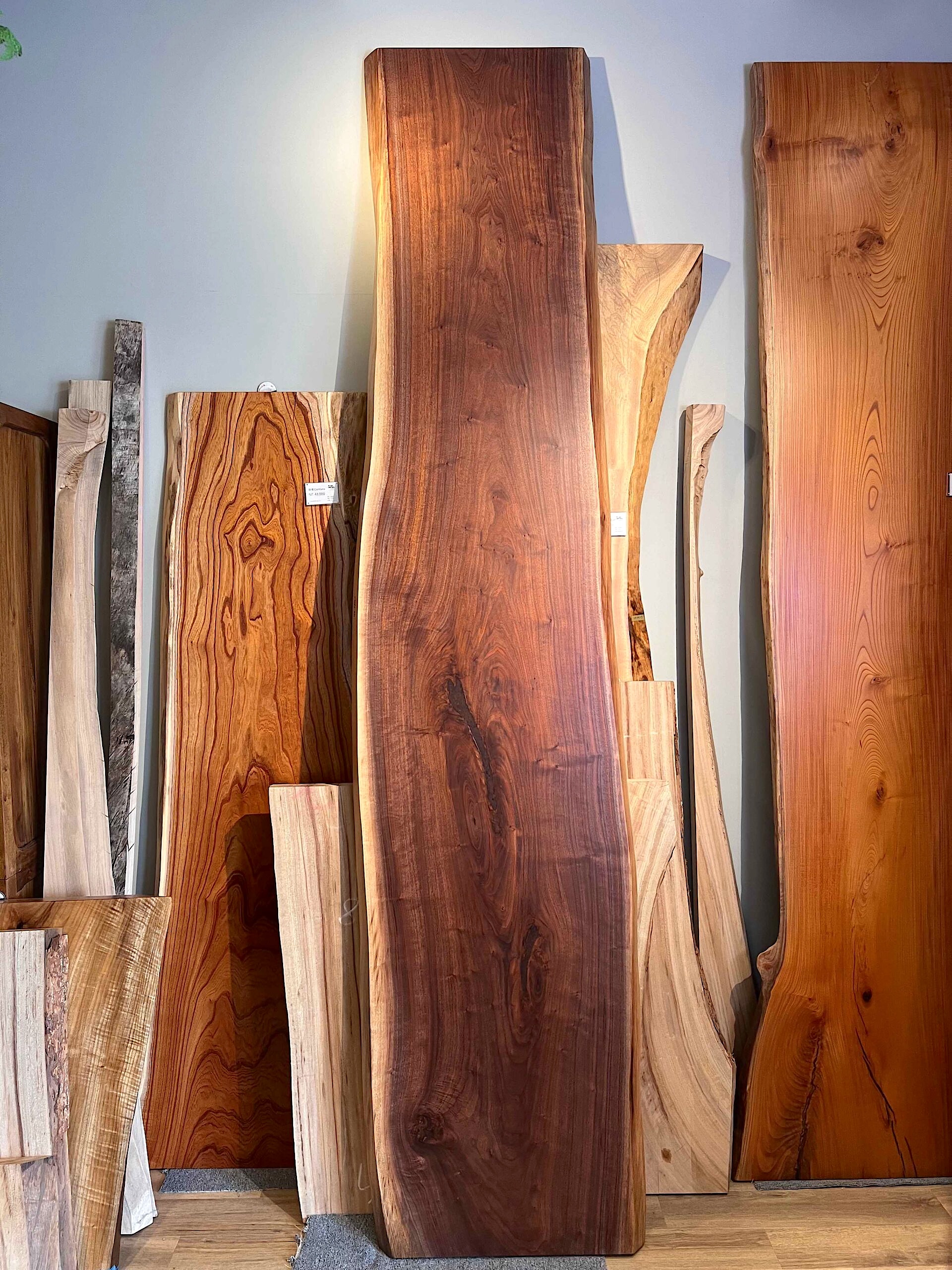
Before a shape is made, the timber already has a pattern. These broad slabs reveal sweeping grain, knots and changes in colour, with uneven edges tracing the outline of the wood.
From slab to board
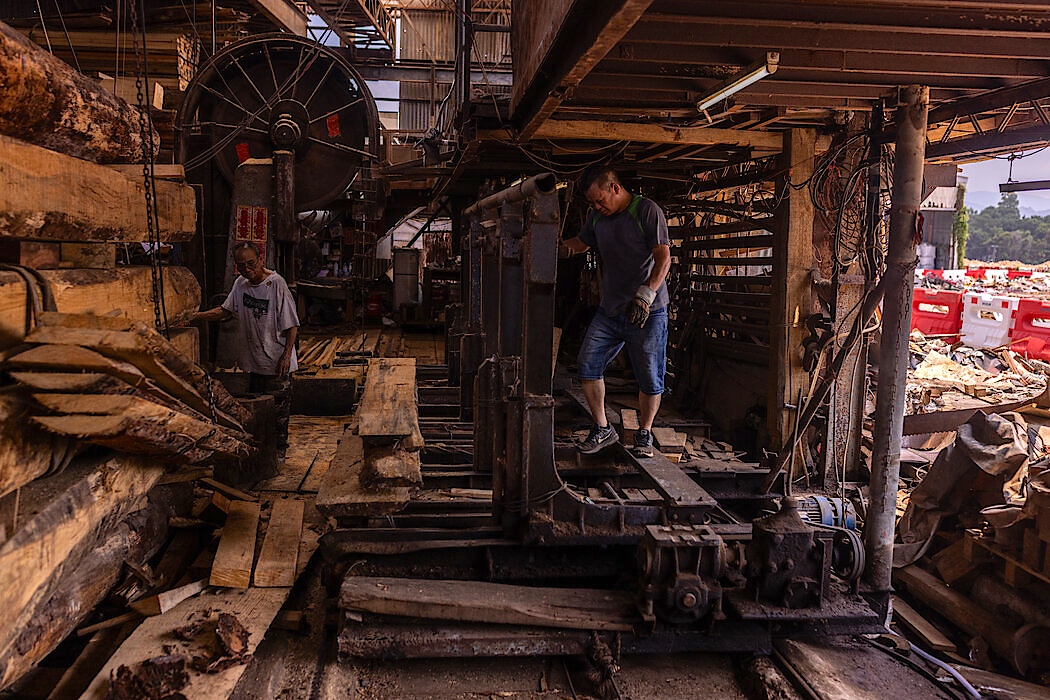
The sawmill photograph places that material in a different setting: heavy timber rests beside cutting machinery. Together, the images show the scale of the wood and the variation across its surface.
02 / Shaping & measurement
A curve,
considered closely.
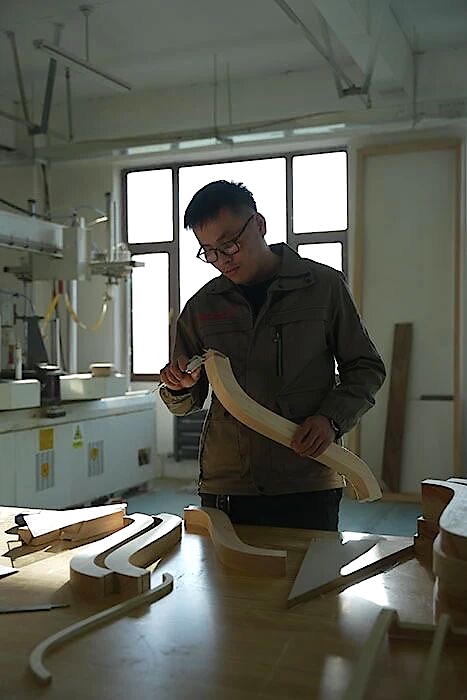
A curved wooden component is held up for inspection, with similar pieces laid out on the workbench. Its changing profile is easier to read away from the surrounding parts.
Look at the dimensions
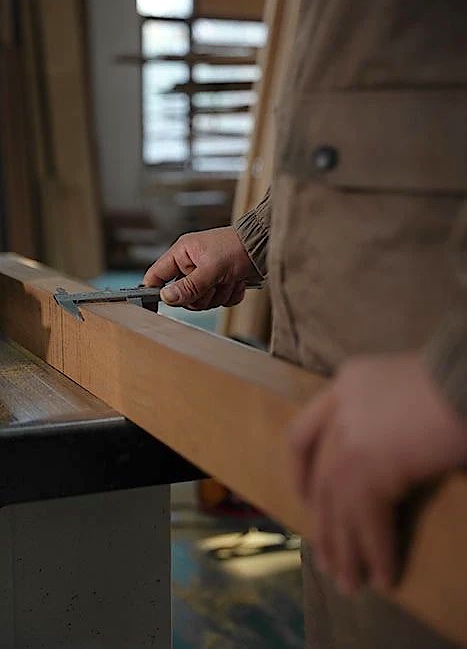
In the close-up, calipers span the edge of a straight wooden piece. The two photographs bring shape and measurement together: a curve checked by hand and a dimension checked with a tool.
03 / Machining & joinery
The opening
defines the fit.
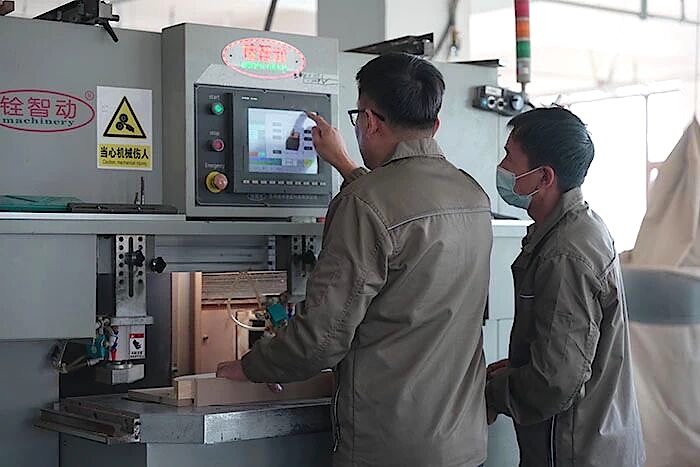
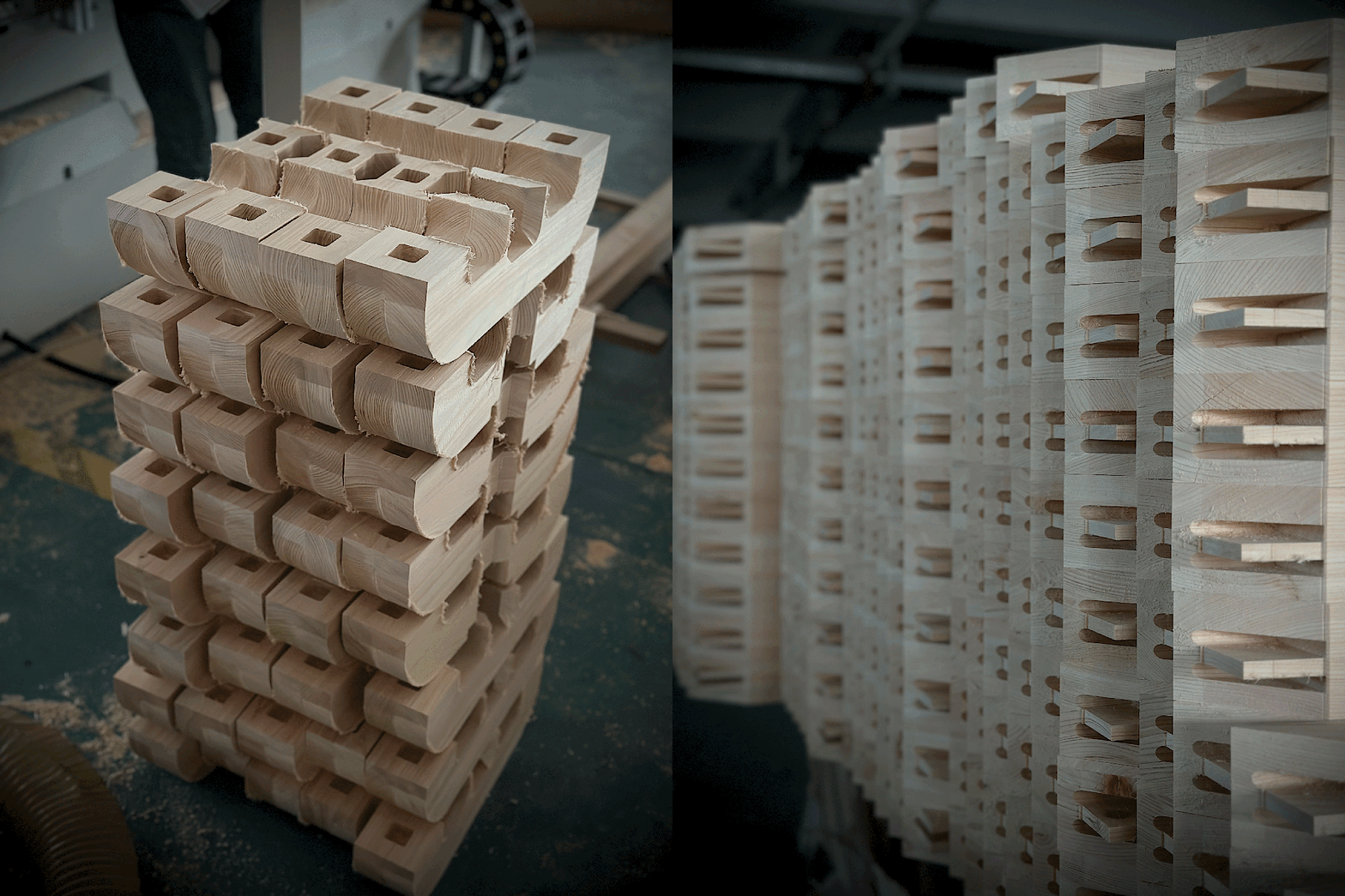
At the machine, two workers attend to a wooden component and the control screen. The companion photograph moves closer to the parts themselves, showing repeated square openings in stacked wooden blocks.
Look inside the joint
The openings have defined corners, while the cut faces reveal the grain and rough fibres of the timber. These details make the preparation of each component visible before it meets another part.
04 / Assembly & woven panels
Piece by piece,
texture takes shape.
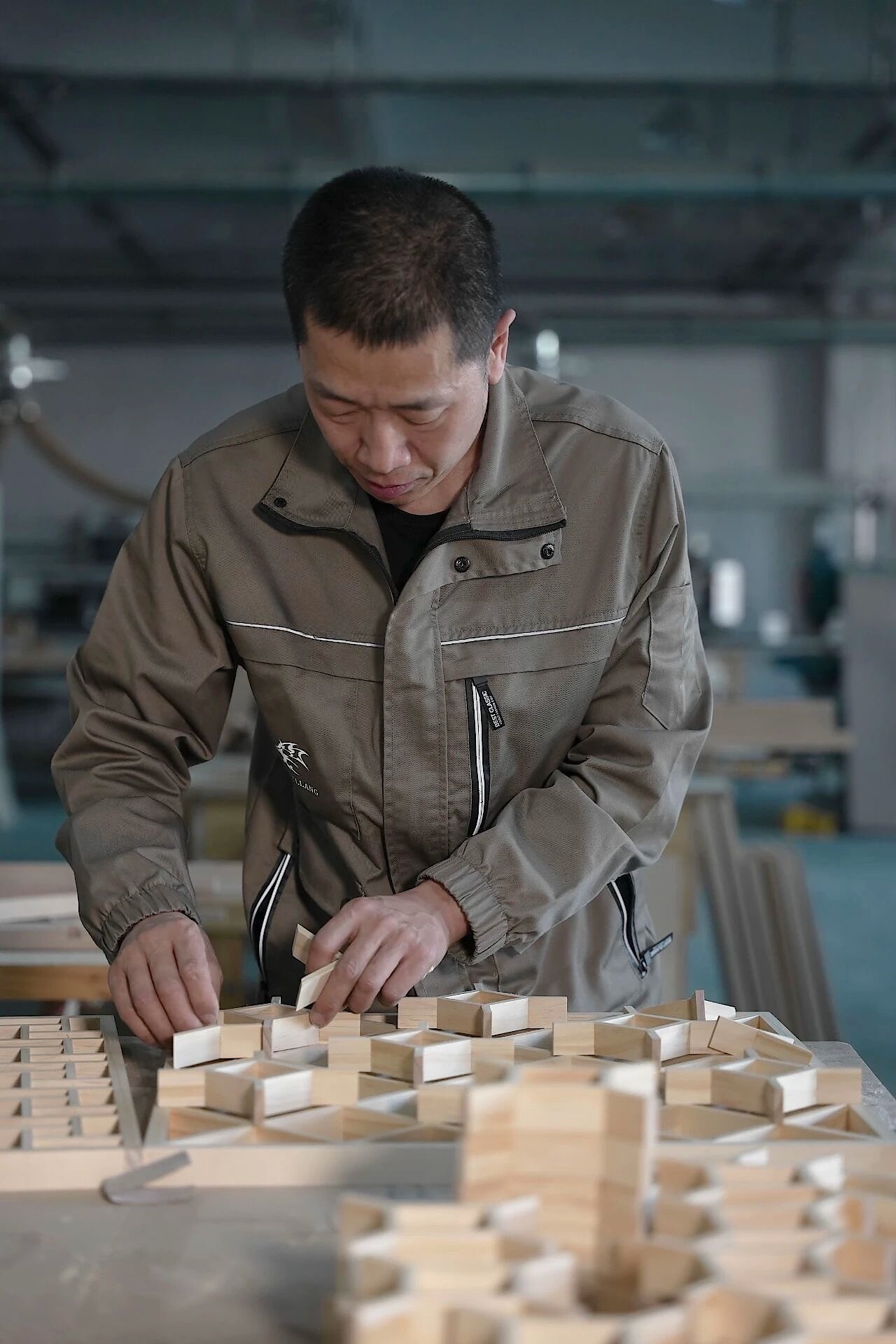
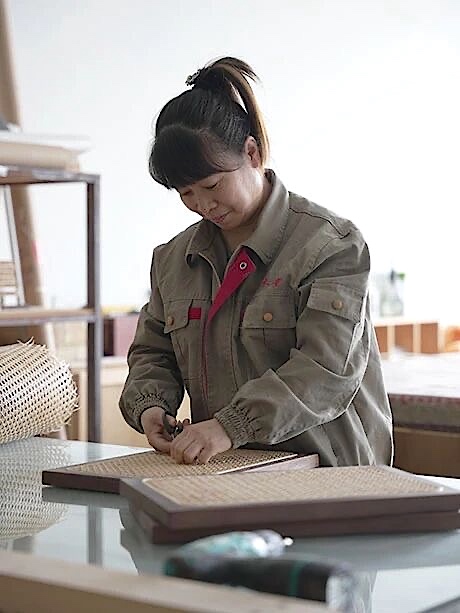
Small wooden pieces are arranged across a workbench as a worker positions them by hand. Nearby in the sequence, a woven panel is worked into a dark wooden frame.
Follow the pattern
The wooden pieces form an open geometric arrangement. The woven panel creates a finer repeating texture, bounded by a solid frame. Both photographs draw attention to the meeting of individual parts.
05 / Sanding & surface inspection
The surface
deserves a closer look.
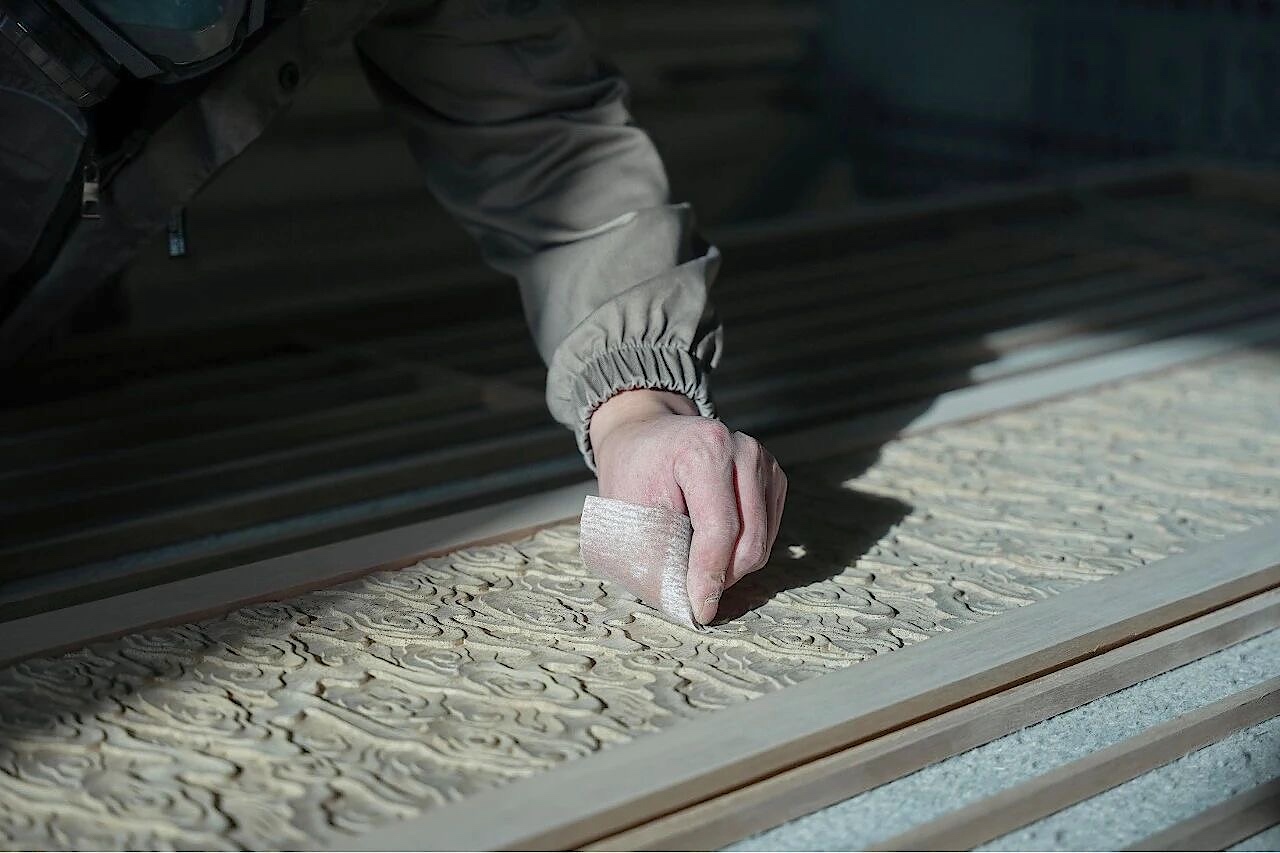
A folded piece of abrasive paper follows the carved pattern of a wooden panel. Raised shapes and recessed areas give the hand a more intricate surface to work across than a flat board.
Across the whole panel
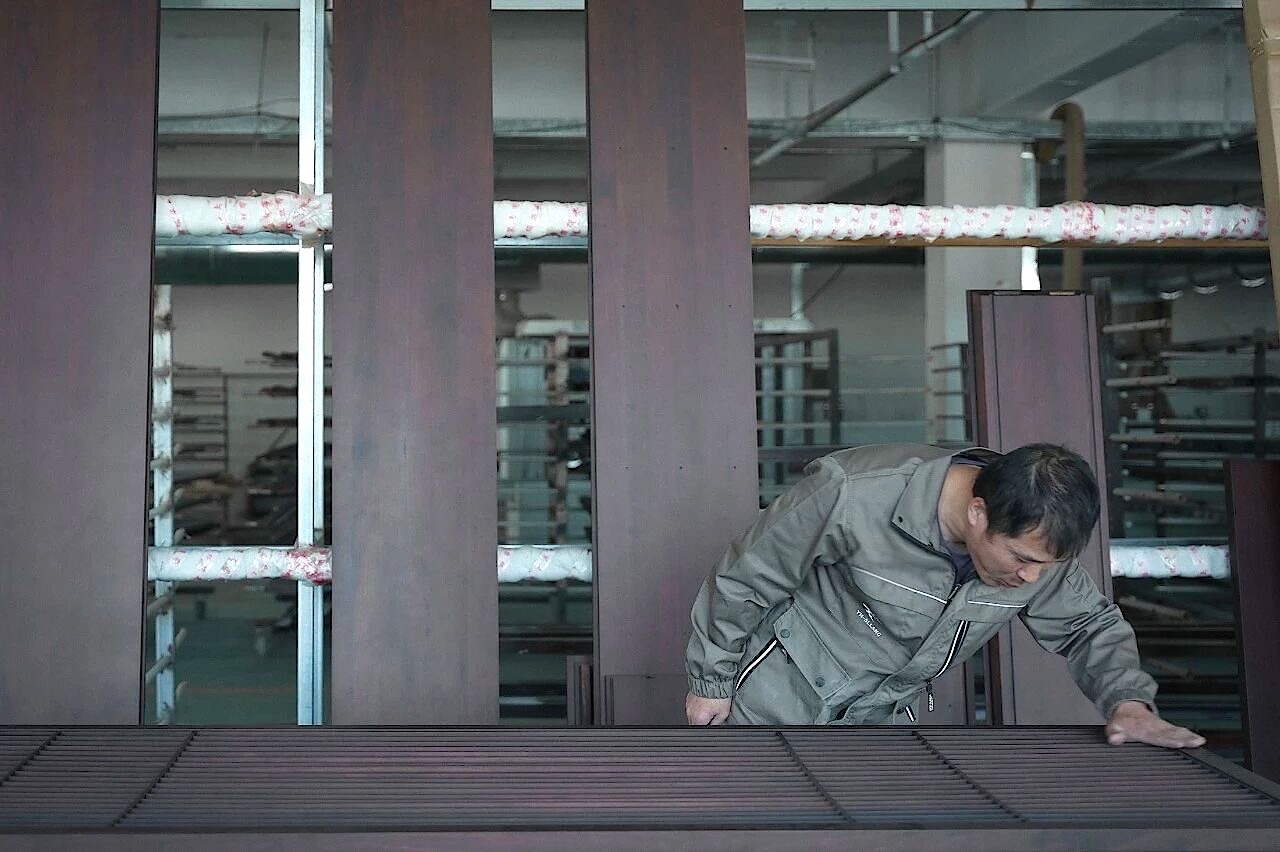
The final photograph shows a worker leaning over a dark slatted panel with a hand resting on its surface. The view widens from a single carved detail to the rhythm and alignment of an entire panel.
Material & making
The work is
in the details.
Grain, curves, openings and woven surfaces each invite a different kind of attention. These photographs move between the scale of a timber slab and the small points where parts meet.
A measurement at an edge. A piece positioned by hand. Abrasive paper following a carved line. Look closely, and the individual tasks become visible in the whole.
Akary
The detail is the signature.